
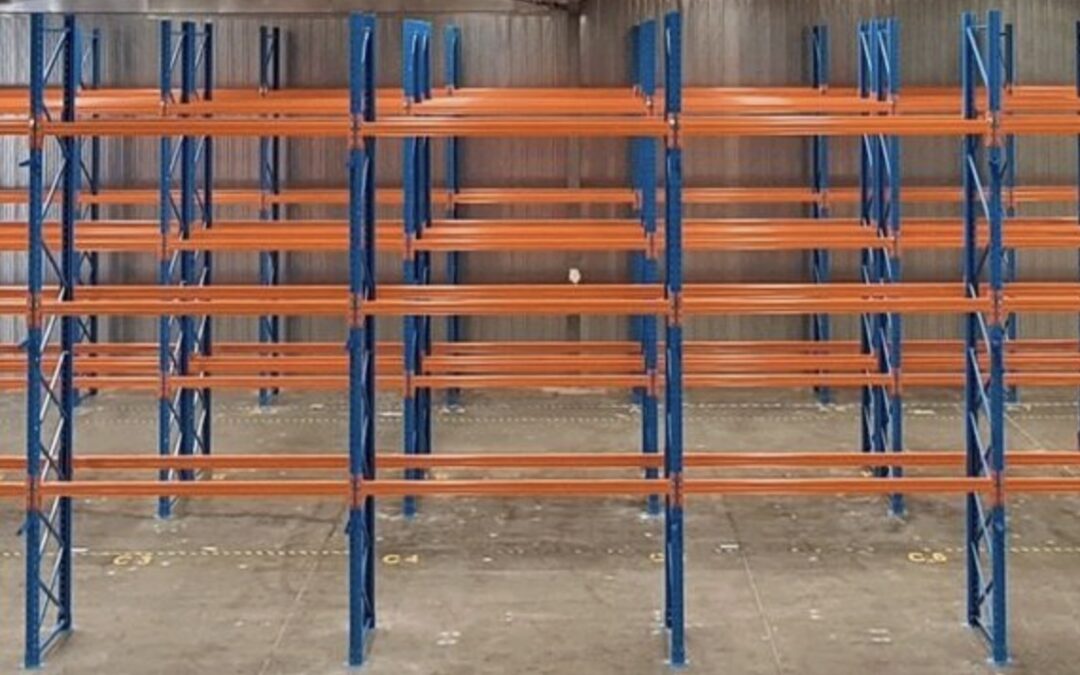
Storerooms can turn chaotic quickly. Boxes stack up, forklifts squeeze through tight aisles, and before long it becomes difficult to find anything – not to mention the growing safety risks. That’s why organised, well‑designed storage isn’t just helpful, it’s essential. Pallet racking is the backbone of a safe, efficient, and productive workspace, giving your business the structure it needs to operate smoothly while making the most of every square metre.
What Is Pallet Racking?
Pallet racking is a strong, steel storage system designed to hold palletised goods safely and efficiently. By storing products vertically, businesses can dramatically increase capacity without expanding their footprint.
Think of pallet racking as the skeleton of your storage space – structured, reliable, and built to keep everything exactly where it should be.
Instead of stacking goods on the floor, pallet racking creates organised levels of storage. Forklifts can load and retrieve pallets easily, aisles stay clear, and staff can move around safely.
How Does Pallet Racking Work?
A pallet racking system is made up of upright frames and horizontal beams that form storage bays. Pallets sit securely on the beams and can be stored at multiple heights depending on ceiling clearance, load requirements, stock turnover, and forklift type.
Every system can be customised to suit your business – whether you’re storing bulk goods, fast‑moving stock, or heavy materials.
Pallet Racking vs Cantilever Racking: What’s the Difference?
Pallet racking is perfect for standard palletised goods – but not for everything.
If you store long or awkward items like timber, pipes, steel lengths, or sheet materials, cantilever racking may be the better choice. It’s designed to support long loads without front frames getting in the way, making loading and unloading much easier.
Still not sure? For more information on cantilever systems and when they’re the right choice, visit our cantilever racking page.